Showing posts with label whole grains. Show all posts

Tuesday, April 5, 2016

Shrimp Poboy Recipe from a Louisiana Registered Dietitian

We have some new readers to the blog, so I thought I'd reintroduce myself and tell you a little about how I became a dietitian. My name is Denon Stacy, MS, RD, CSP, LD. I am a Registered Dietitian (RD) at a pediatric hospital. I’ve enjoyed teaching children and their families about health and nutrition for 8 years. As a pediatric dietitian, my goal is to help children develop healthy eating habits and to fuel strong, healthy kids.


Nutrition is important because it fuels our body. I first learned about nutrition in 4th grade science class. I had an excellent teacher (Hey Mrs. McLin!) who explained how healthy eating involves eating a variety of foods and food groups. I learned the importance of eating different colors. Eating foods with different colors helps us get the vitamins and minerals our bodies need to growth tall, strong, and be healthy. For example, the orange color in carrots is caused by beta-carotene, which is also known as vitamin A. Vitamin A helps keep our eyes healthy. So, listen to your parents when they say “eat your carrots; they’re good for your eyes.” It’s true. That’s good nutrition!

Since I’m from a coastal state, I had access to plenty of seafood. I developed a love of seafood. We had crawfish boils in the Spring, which were always fun, family gatherings. Since crawfish is not available year-round, the recipe I’m sharing is a take on a shrimp dish that is commonly found in Louisiana. This recipe is a quick dinner. It’s a fancier sandwich that is approachable for most children . . . even children who may not love seafood.


Grilled Shrimp Po’boy
4 whole wheat baguettes
1 pound large shrimp (31-35 count per pound)
1 cup romaine lettuce, shredded
1 tomato
½ cup cucumber, thinly sliced
1 Tablespoon lemon juice
1/2 teaspoon garlic powder
½ onion, sliced into rings


Remoulade sauce
1 cup light mayonnaise
2 Tablespoon whole grain or Dijon mustard
2 Tablespoons ketchup
1 clove garlic, minced
½ teaspoon pepper
½ teaspoon paprika
1 teaspoon onion powder
1/8 teaspoon cayenne pepper
1 teaspoon hot sauce
1 teaspoon lemon zest
2 Tablespoon lemon juice
1 Tablespoon parsley, finely chopped
1 teaspoon Worcestershire sauce


To make remoulade sauce, combine mayonnaise, mustard, ketchup, garlic, black pepper, paprika, onion powder, cayenne pepper, hot sauce, lemon zest, lemon juice, parsley, and Worcestershire sauce. If you prefer spicy foods, you can adjust the hot sauce and cayenne to taste. Refrigerate sauce until needed.


Peel and devein shrimp. Add 1 Tablespoon lemon juice and ½ teaspoon garlic to marinate shrimp in a large bowl.


Prepare vegetables for sandwich assembly. Wash and dry all vegetables. Shred lettuce. Slice cucumber, tomato, and onion. Now that you have your mis en place (French for put in place), it's time to cook!


Heat grill pan over medium. Add shrimp and cook 4-5 minutes per side until opaque and internal temperature reaches 145*F.


To build the po’boy or sandwich, spread ~1-2 Tablespoons remoulade on bread. Add lettuce, tomato, onion, and cucumber. Top with shrimp.
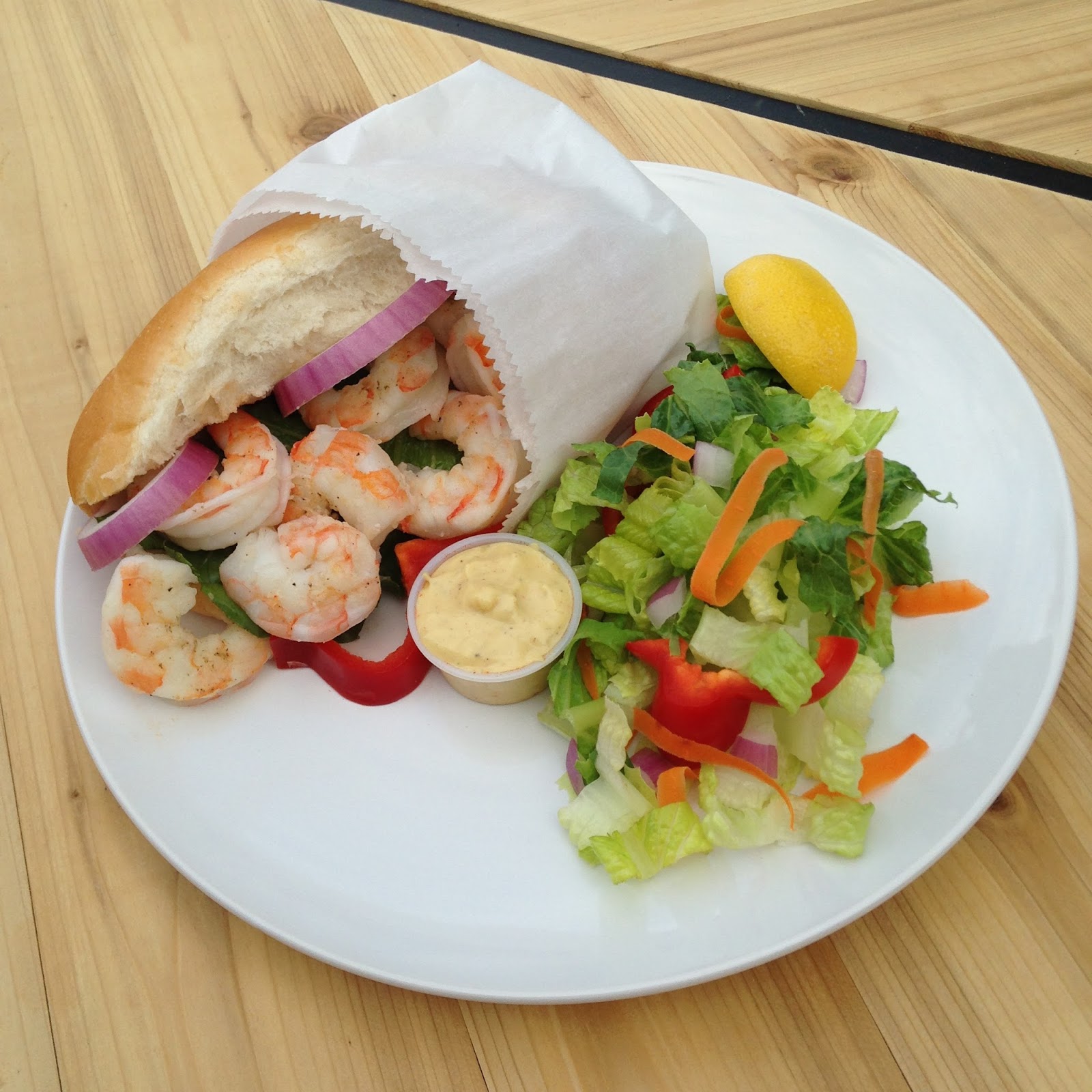


You can serve this dish with a side salad, coleslaw, or raw vegetables. You can use extra remoulade for dipping or as a salad dressing. Enjoy!


Tips:

  • Crawfish are commonly used in Louisiana cuisine, but shrimp is a good substitute as it is more readily available than crawfish.
  • Increase your fiber intake by switching grains. Choose whole grains like whole wheat bread, brown rice, or whole grain tortillas. Look for > or = 3 grams of fiber per serving on the Nutrition Facts Label to ensure you're choosing a whole grain. You’ll get more fiber which promotes satiety, the feeling of fullness. Fiber also helps lower cholesterol.
  • Many poboys feature fried meats. According to the American Heart Association, you should limit fried foods to three servings per week. This is an easy switch. Instead of frying meats, try grilling, baking, or roasting. This decreases the fat added to foods from the cooking method.
My nutrition philosophy is everything in moderation. There are no “bad foods.” I encourage age-appropriate amounts of fruits and vegetables per day; I’ve never met anyone that eats too many fruits and vegetables.

I encourage nutrition plans that include a variety food groups. Don’t be afraid to try new foods. Be brave! Have an adventurous palate! We need a balance of all of the food groups to provide adequate nutrients to fuel our bodies, maintain our health, and prevent diseases like diabetes, high cholesterol, and elevated blood pressure. I also support the balance of eating well and including physical activity into our everyday lifestyle. We need to fuel our body in a healthy way and be physically activity to maintain good health.


I hope you’ve enjoyed getting a peak into the life of a RD from Louisiana. Try the recipe!


For more recipes, encouragement, and tips for healthy eating, follow me on PinterestInstagram, and Twitter

If you liked this post, you might enjoy:


Monday, April 13, 2015

Healthy RD Challenge: Day 6

How are you doing with the #HealthyRD Challenge? I hope you are doing well! 


What is the Healthy RD Challenge?
This is my challenge for each of us to take one step a day on the road to being healthier . . . the healthy road or #HealthyRD if you will. If you participate in the #HealthyRD challenge, make sure you use the hashtag #HealthyRD and tag or tweet me, @RDtipoftheday, for a chance to be featured! I am sharing the five healthy choices I'm making each day this week.  Here's a reminder of what I did for the Healthy RD Challenge last week: Day 1Day 2Day 3Day 4, and Day 5. Check out the links to get ideas on living a healthier lifestyle.


Healthy RD Challenge: Day 6
Today, I am eating whole grains, which is my #HealthyRD Day 6 healthy choice. I love the taste of whole grains. I loved white bread and white rice growing up. Louisiana cuisine is full of white rice in jambalaya, gumbo, and etoufee. I acquired the taste for whole grains as I got older. There are whole grain versions of all your favorite grains: whole grain rice, bread, oatmeal, tortillas, flour, popcorn, and pasta. To double-check that your grain choice is a whole grain, look for at least 2-3 grams of fiber per serving. Whole grains provide more fiber than refined grains.


Fiber is very beneficial to your health. Fiber helps make you feel full (satiety), can help with weight management, and can lower cholesterol levels. So, aim to eat at least 50% of your grain choices as whole grains. Get more fiber, and be healthy! 


How will you choose to be healthy today?

Check with your personal RD or MD before starting a new diet or exercise program to make sure it is healthy, safe, and the right choice for you.

For more recipes, encouragement, and tips for healthy eating, follow me on PinterestInstagram, and Twitter . You can subscribe to this blog, RDtipoftheday.blogspot.com, through BlogLovin.

If you enjoyed this post, you might enjoy:


Friday, February 27, 2015

Dietary Fiber and Heart Health

February is American Heart Health Month, so we are looking at lifestyle changes you can make to be more heart healthy. So, how can you be heart healthy? 
- Eat a Healthy Diet
- Be Physically Active
- Check in with Your Doctor


Today we are focusing on healthy dietary choices to be more heart healthy. A diet high in fiber helps keep your heart healthy.

Types of Fiber
There are two types of fiber, soluble and insoluble. Soluble fiber dissolves in water. In the body, it serves attracts water to slow intestinal transit time. Insoluble fiber does not dissolve in water; it passes through the body undigested and speeds intestinal transit time. In other words, insoluble fiber has a laxative-type effect to help prevent constipation.

Food Sources of Fiber
Fiber is found in many foods. Fruits, vegetables, and whole grains are all good sources of fiber. Sources of soluble fiber include: apples, beans, blueberries, carrots, celery, cucumber, lentils, oatmeal, oranges, pears, and strawberries to name a few. Source of insoluble fiber include corn bran, wheat bran, nuts, raisins, root vegetable skins, seeds, and whole grains. If you are unsure if your food choice is a "whole grain," look on the Nutrition Facts Label to see if the food has > or = to 3 grams of fiber. If it does, that is a great whole grain choice!

Functions of Fiber
So, what does fiber do? Fiber helps fill you up. It slows stomach emptying, which can help with weight management. Fiber also slows absorption of carbohydrates which can help aid blood glucose management. Soluble fiber can also inhibit absorption of dietary cholesterol, which helps lower blood cholesterol like LDL (low density lipoprotein) when included as part of a heart healthy diet.

How Much Fiber Is Recommended?
Adults need about 25-35 grams of fiber per day. However, most Americans only consume about 15 grams of fiber per day. That's only 50% of the recommended amount! So, how can you get more fiber? 

  • Switch to whole grain products. 
    • So instead of eating white rice, flour tortilla, or flour pasta, choose brown rice, whole grain tortillas, whole wheat pasta, oatmeal, or popcorn (try 94% fat free with reduced sodium). 
  • Aim for 5 servings of fruits and vegetables per day
    • Fruits and vegetables are a good source of fiber. Try eating fruits and vegetables with the skin on to get more insoluble and total fiber. 

Please note that different medications or disease states require more or less fiber. Talk with your personal RD or MD before starting a new diet or exercise regimen. If you have a family history of high blood pressure, high cholesterol, or heart attack (myocardial infarctions), please check in with your doctor to get a physical. Tell your doctor your family history of heart disease, your concerns for your health, and ask about what screening you should do.

We will go through each of the dietary and lifestyle topics this week to look more in depth on how you can be heart healthy. Stay tuned for more on physical activity or take a look back at cholesterol, dietary fats, and sodium in relation to heart health.

For more recipes, encouragement, and tips for healthy eating, follow me on Pinterest, Instagram, and Twitter . You can subscribe to this blog, RDtipoftheday.blogspot.com, through BlogLovin.