Showing posts with label seasonal. Show all posts

Thursday, October 13, 2016

What's In Season for Fall

Happy Fall! As a registered dietitian (RD), I get many questions about healthy eating, especially eating healthy on a budget. One of my biggest tips for healthy eating on a budget is to eat seasonally. How do you eat seasonally? You can check out this list below and go to a local farmers market or grocery store. Eating seasonally is one of my favorite ways to get inspiration to plan menus.


Fruits
Apples
Pears
Cranberries
Fig

Vegetables
Butter Lettuce 
Broccoli
Brussels sprouts
Cauliflower
Celery
Fennel
Garlic 
Ginger
Grapes
Green beans
Green onions (scallions)
Jalapeno Peppers
Parsley
Pears
Pumpkins
Mushrooms
Rosemary
Sage
Shallots
Sweet Potatoes
Thyme
Winter Squash

I encourage you to try eating seasonally. The benefits include:

  • Eating locally - Eating locally supports local farmers or if you garden, you can eat what is ripe straight from your garden.
  • Cost Effect - Eating fresh means you don't pay for shipping from other areas.
  • Fresh - Eating seasonally means that vegetables
For more Fall and holiday recipes and tips for healthy eating, follow RDtipoftheday on Pinterest, Instagram, and Twitter. I provide different resources, tips, and recipes on each social media platform. So, make sure to follow me on all of them to get your #RDtipoftheday.

If you like this post you may also like:

Monday, August 15, 2016

7 Tips for Healthy Eating on a Budget


Eating healthy is a priority. Sticking to your budget is a necessity. So, how do you balance the two? You get healthy eating tips from a Registered Dietitian (RD) that allow you to stay on a budget. Here are my RD tips for eating healthy on a budget.

Set a budget.
It's important to have a goal budget to meet or stay under. Figure out how much you want to spend on eating and how that works into your overall budget.

Make a meal plan.
Decide what you will be eating for the week. Make a grocery list for your breakfasts, lunches, dinners, and snacks for the week. Have a list and stick to it. Then, you will be more likely to stick to your budget. Extra items add cost to your budget.

Buy seasonally.
A great way to eat healthy and stay on budget is to eat seasonally. When you choose to eat fresh fruits and vegetable that are in season, they are cheaper. 

Buy shelf-stable and frozen items in bulk.
Examples - grains, canned veggies or fruit, and frozen vegetables and fruit.  Choose no added salt canned vegetables to limit added salt. Choose fruit packed in its own juice to limit added sugar. When comparing prices, look at the unit price. 
image via Amazon

The unit price compares price per ounce or unit. This gives you a better idea if the larger size or the smaller size is a better deals

Try store brands.
Many stores have their own store brand. Wal-mart has "Great Value" brand. Kroger has their "Private Selections" brand. Target has "Archer Farms"  and "Market Pantry" brands. Many times the stores make a comparable product with a lower price. Compare the unit price of the store brand and brand name product. Try them; you may like them and save some money.


Freeze leftovers.

This tip saves time and money. Buy food in bulk; buy enough for 2 meals. Cook once. Eat one meal. Freeze the other meal. And you have two delicious, healthy meals that took about half the time to prepare! 

Shop the sale.
Look for your favorite foods on sale. Avoid buying things just because they are on sale. But if you see one of you or your family's favorite foods on sale, buy a little extra at the cheaper price.


Healthy eating is an investment in your health. Healthy eating is an investment in your future. It is also an investment in your child's health and your family's health. We know that healthy eating affects brain development, school performance, and can decrease the risk of developing diseases like diabetes, high blood pressure, and stroke. For more on the consequences of obesity, check out the Academy of Nutrition and Dietetics.


How can you afford not to eat healthy?


If you have any tips for healthy eating on a budget, share them below in the comments.

August is Kids Eat Right Month™, the Academy of Nutrition and Dietetics and the Academy Foundation's chance to highlight the fight for our children's healthy future. Find out how you can get involved!

Stay tuned all this month for more on healthy eating and Kids Eat Right Month. For more recipes, encouragement, and tips for healthy eating, follow me on Pinterest, Instagram, and Twitter.


If you liked this post, you might enjoy:


Monday, October 5, 2015

September 2015 Favorites


Thank you for all of the love this month! September has been a busy month. We are all adjusting to the start of school. I'm finishing preparations for Spring classes and completing some consultation work. If you missed any of the posts this month, here are the top five favorite posts you visited this month. Enjoy!


Let me know if there are any nutrition-related topics you would like to know more about. Please comment below. For more recipes, encouragement, and tips for healthy eating, follow me on PinterestInstagram, and Twitter

Wednesday, September 23, 2015

What's in Season for Fall?

There is a huge trend in food - eating local! The best way to eat local is to eat in season. So, what fruits and vegetables are in season for Fall?

  • Acorn Squash
  • Asian Pear
  • Broccoli
  • Brussels Sprouts
  • Butter Lettuce
  • Butternut Squash
  • Cauliflower
  • Cranberries
  • Date Plum
  • Daikon Radish
  • Endive
  • Garlic
  • Ginger
  • Grapes
  • Hearts of Palm
  • Huckleberries
  • Jalapeno Peppers
  • Jerusalem Artichoke
  • Key Limes
  • Kumquats
  • Muscadine Grapes
  • Mushrooms
  • Passion Fruit
  • Pear
  • Persimmons
  • Pineapple
  • Pomegranate
  • Pumpkin
  • Radicchio
  • Sweet Potatoes
  • Swiss Chard
  • Turnips
Thank you to More Matters for this seasonal produce list. This month I am highlighting a variety of fruits and vegetables. We will learn about the vitamins and minerals of each fruit and veggie. We'll learn how to pick the best produce and ideas for including more fruits and vegetables into your daily diet.

Here's to a great month!

For more recipes, encouragement, and tips for healthy eating, follow me on PinterestInstagram, and Twitter

Monday, September 14, 2015

The A, B, C's of Produce

This month I am highlighting a variety of fruits and vegetables. Fruits and vegetables contain  a plethora of micronutrients like vitamins and minerals. There are many health benefits to consuming adequate amounts of vitamins and minerals including promoting good health and disease prevention. Today, we're also learning the A, B, C's of how to pick the best produce.


Apples

  • There are a variety of types of apples: Red Delicious, Granny Smith, Gala, the list is almost never-ending. The different varieties of apples have different textures, tartness, and sweetness.
  • Selection: The key to picking a good apple is to pick a firm apple and avoid bruises that create mush spots.
  • Storage: Refrigerate apples in a plastic storage bag; keep away from strongly-odored foods. 
  • Nutrition Benefits: fat-free, cholesterol free, and a good source of dietary fiber


Bananas
  • Selection: Choose bananas that are slightly green near the tip and stem. Bananas should be firm; avoid bruises.
  • Storage: Bananas continue to ripen at room temperature. You may also store banana in the refrigerator for up to 2 weeks. The skin of the banana may darken.
  • Nutrition Benefits: fat-free, cholesterol free, and a good source of dietary fiber, vitamin C, and potassium.


Beets
  • Selection: Choose beets that have smooth, firm skin. Look for fresh leaves that are not wilted.
  • Storage: Remove leaves, but leave about one inch of stem. Store in the refrigerator in a perforated plastic bag. Use within 3 weeks.
  • Nutrition Benefitsfat-free, cholesterol free, and an excellent source of folate
  • You can eat the beet and the leaves!


Bell Peppers
  • Selection: Chose firm, brightly colored bell peppers. Avoid dull or shriveled peppers.
  • Storage: Refrigerate in a zip-top plastic bag; use within 5 days.
  • Nutrition Benefits: fat-free, cholesterol free, high in vitamin C
  • Fun Fact: Pepper, including bell peppers, originated in Central and South America.


Broccoli
  • Selection: Choose broccoli with bluish-green florets and tight heads. Choose broccoli that does not have an odor.
  • Storage: Store in the refrigerator in a perforated plastic bag. Use within 3-5 days for maximum flavor and freshness.
  • Nutrition Benefitsfat-free, cholesterol free, high in folate, and a good source of fiber and potassium.

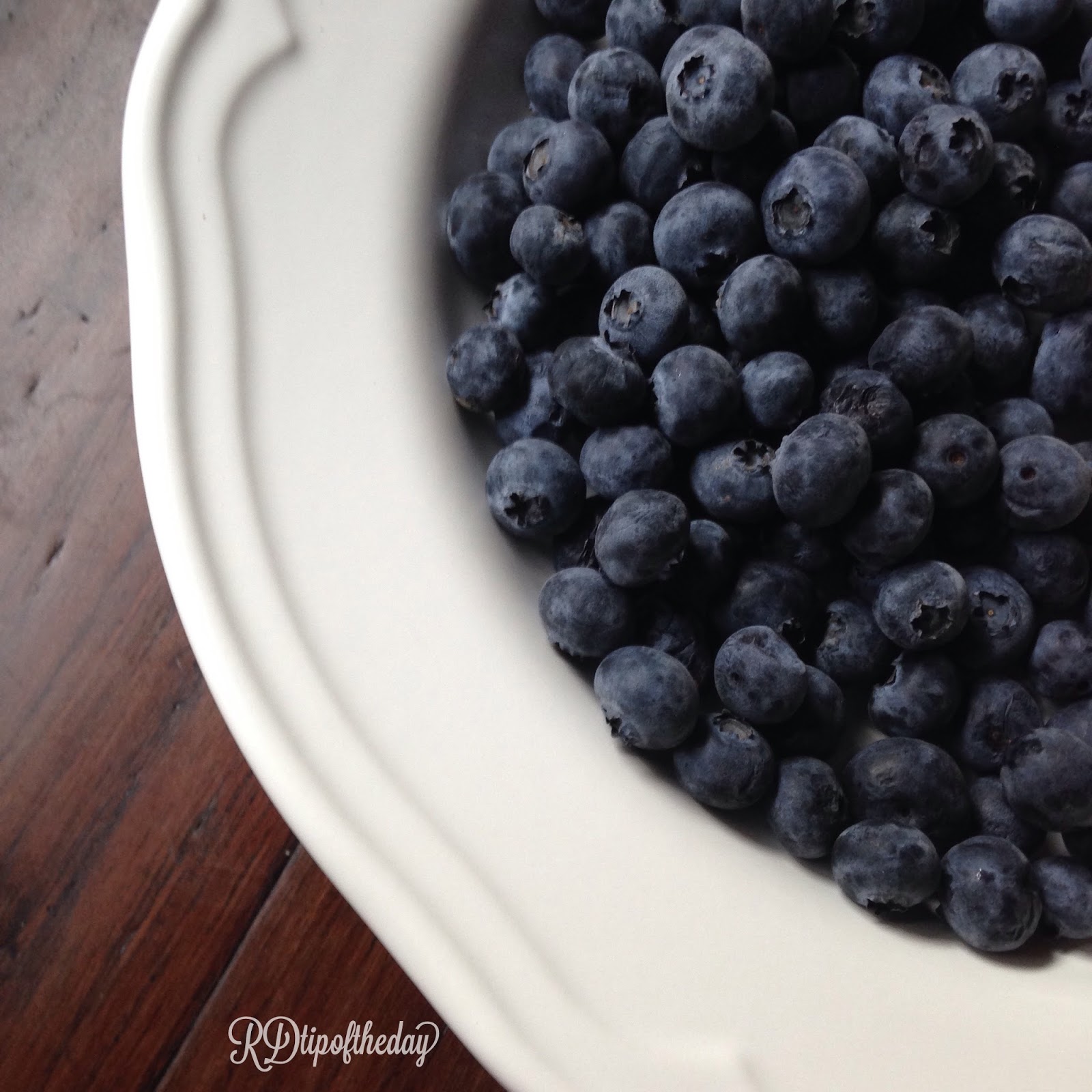
Blueberries
  • Selection: Choose firm, plump blueberries with a dusty blue color. Avoid shriveled or moldy berries.
  • Storage: Refrigerate for 10-14 days.
  • Nutrition Benefits: low fat and a good source of vitamin C and fiber
  • Fun Fact: Early American colonists made grey paint by boiling blueberries in milk!


Cherry Tomatoes
  • Selection: Choose tomatoes that are plump and firm with bright, shiny skin. Avoid mold.
  • Storage: Store at room temperature away from direct sunlight. 
  • Nutrition Benefitshigh in vitamin A and C and a good source of potassium


Grapes
  • Selection: Choose grapes that are plump and firm. Avoid mold.
  • Storage: Grapes can be refrigerated in a plastic bag for up to 1 week.
  • Nutrition Benefitsfat-free, cholesterol free, and very low in sodium

Stay tuned for more on picking produce in the remainder of the alphabet. Throughout this month, I will share ideas for including more fruits and vegetables into your daily diet. For more recipes, encouragement, and tips for healthy eating, follow me on PinterestInstagram, and Twitter

Wednesday, September 9, 2015

Eating Local Year-Round

There is a huge trend in food - eating local! Eating local gives you fresh produce packed with micronutrients, like vitamins and minerals. The best way to eat local is to eat in season. So, what's in season year-round?

  • Apples
  • Avocados
  • Bananas
  • Bell Peppers
  • Broccolini
  • Cabbage
  • Carrots
  • Celery
  • Cherry tomatoes
  • Leeks
  • Lemons
  • Lettuce
  • Mushrooms
  • Olives
  • Onions
  • Papayas
  • Parsnips
  • Pearl Onions
  • Potatoes
  • Snow Peas
Thank you to More Matters for this year-round produce list. This month I will highlight a variety of fruits and vegetables. We will learn about the vitamins and minerals of each fruit and veggie. We'll learn how to pick the best produce and ideas for including more fruits and vegetables into your daily diet.

Here's to a great month!

For more recipes, encouragement, and tips for healthy eating, follow me on PinterestInstagram, and Twitter

Wednesday, April 29, 2015

Healthy Snacks T.V. Segment Part 1

The last television appearance I did was on healthy snacking. I wanted to share some of the tips that I shared in the interview. And, there are some bonus tips for healthy eating as well!


What are some tips to eat healthfully
This is one of the most common questions that I get as an RD. So I use the acronym E.A.T. to help myself and my clients remember to eat healthfully.
  • E is for ‘easy.’
    • We want to make healthy eating easy, so have fresh fruits and vegetables easily accessible in your home or work place. 
  • A is for ‘affordable.’
    • One of the most common barriers that I see to healthy eating is the perception that healthy eating is expensive. I would encourage you to eat seasonal fruits and vegetables. If you eat seasonally, usually produce is more affordable.
  • T is for ‘tasty.
    • Healthy eating should be enjoyable. We enjoy eating because it is tasty. So, try new fruits and vegetables to see which ones you prefer. Or try preparing fruits and vegetables

I hope this will be helpful to you and encourage healthy snacks throughout the day. I hope you remember to E.A.T healthy year-round. And, I hope you remember to make healthy choices when you are busy and on-the-go.

For even more recipes, encouragement, and tips for healthy eating, follow me on PinterestInstagram, and Twitter.

Tuesday, April 21, 2015

Spring Salad Recipe: Fresh Fruit and Spinach Salad

I love Spring! Everything seems green, new, and alive! I even love the rain . . . it's good for naps (hahaha). And, we all know April showers bring May flowers.


This year, I started a small herb garden. We will see if I have my grandfather's green thumb . . . or not. Let me know if you have any tips for growing herbs in containers. I would love to hear from you.

I love herbs! They are a great way to add flavor to dishes without adding fat, sugar, or salt. Since I am a clinical dietitian (aka I work mainly in a hospital setting), I have many patients who are trying to limit added fat, added sugar, or sodium in their diet for various health reasons. 

So this week, I plan to share some healthy recipes that are limited in added sugar, added saturated fat, or sodium. These recipes are healthy and full of flavor! How can that be?!? Well, we are using some fresh, seasonal ingredients. We are also going to be using local herbs (out of my garden) and aromatic vegetables to bring tons of flavor without all the fat, sugar, and salt. Stay tuned!

Today, I am featuring one of my favorite salads. It reminds me of Spring and provides fruit and vegetables in one dish! I made this for my family on Easter, and it was a hit!


Ingredients
Strawberries
Blueberries
Pecans
Spinach
Mint
Vinaigrette (I used a raspberry vinaigrette; it was delicious)
*Feta 
(*Optional: you may omit the feta if you don't like this cheese, or if you are watching your sodium or saturated fat intake.)

Wash all fruits, herbs, and vegetables. Toss all the ingredients together. Dress with vinaigrette before serving. Enjoy!

If you've never tried a salad that mixes fruits and vegetables, this is a great one to start with. If you have a friend or family member with a sweet tooth, this is also a great salad to make for them. Try it!

For even more recipes, encouragement, and tips for healthy eating, follow me on PinterestInstagram, and Twitter .