Showing posts with label nutrition. Show all posts

Monday, August 27, 2018

4 Healthy Eating Tips for Busy Schedules

Do you ever feel too busy? Like you are being pulled in several directions at once? Busyness is one of the main barriers to healthy eating. Busyness does not have to keep you from living a healthy lifestyle.

Fall can be a busy season, and it's time for back-to-school season! I loved going back-to-school; yes, I was that kid. I was ready to see my friends every day, meet my new teacher, and learn something new! With new school supplies in hand (or backpack), I was ready.

The preparation for back-to-school was minimal as a kid. Go shopping with Mom for new clothes and shoes. The biggest decision I had to make was color-coding my school supplies for each class. I got matching folders for homework, binders or notebooks, and textbook covers. I remember science was always green. Did y'all do this?


As adults, back-to-school preparation is a whole different ball game. This is true if you are going back to school as an adult, taking college or graduate school courses, or, if you're sending kids back-to-school. To make this transition easier, here are some nutrition tips to ease you into back-to-school season and beat the busyness.


1) Prep ahead.
The morning rush can be just that - rushed! Think about ways you can make the morning less of a frenzy. Can you make tomorrow's breakfast or pack a lunch tonight?

Action steps: Try packing tomorrow's lunch tonight. Try a make-ahead breakfast; I like making granola on the weekend for a quick and easy breakfast.


2) Cook once eat twice.
When you're cooking dinner, think about making a little extra. Then, you can turn last night's leftovers into tomorrow's lunch!

Action step: What recipe can you double to make leftovers?


3) Eat the rainbow.
I like using the MyPlate model to build a healthy lunch. Aim for at least 3 of the 5 different food groups to get a variety of nutrients. Try to include at least one serving of fruit or vegetables every time you eat.

Try to "pack a rainbow." This means packing a colorful lunch, which helps you build a tasty, healthy, and satisfying meal. Colorful food is visually appealing, and helps you avoid a boring desk lunch.

Action step: Pack a colorful meal. Try making a salad or a rice bowl with lots of veggies. Try a spinach wrap instead of a sandwich.
  

4) Pack healthy snacks.
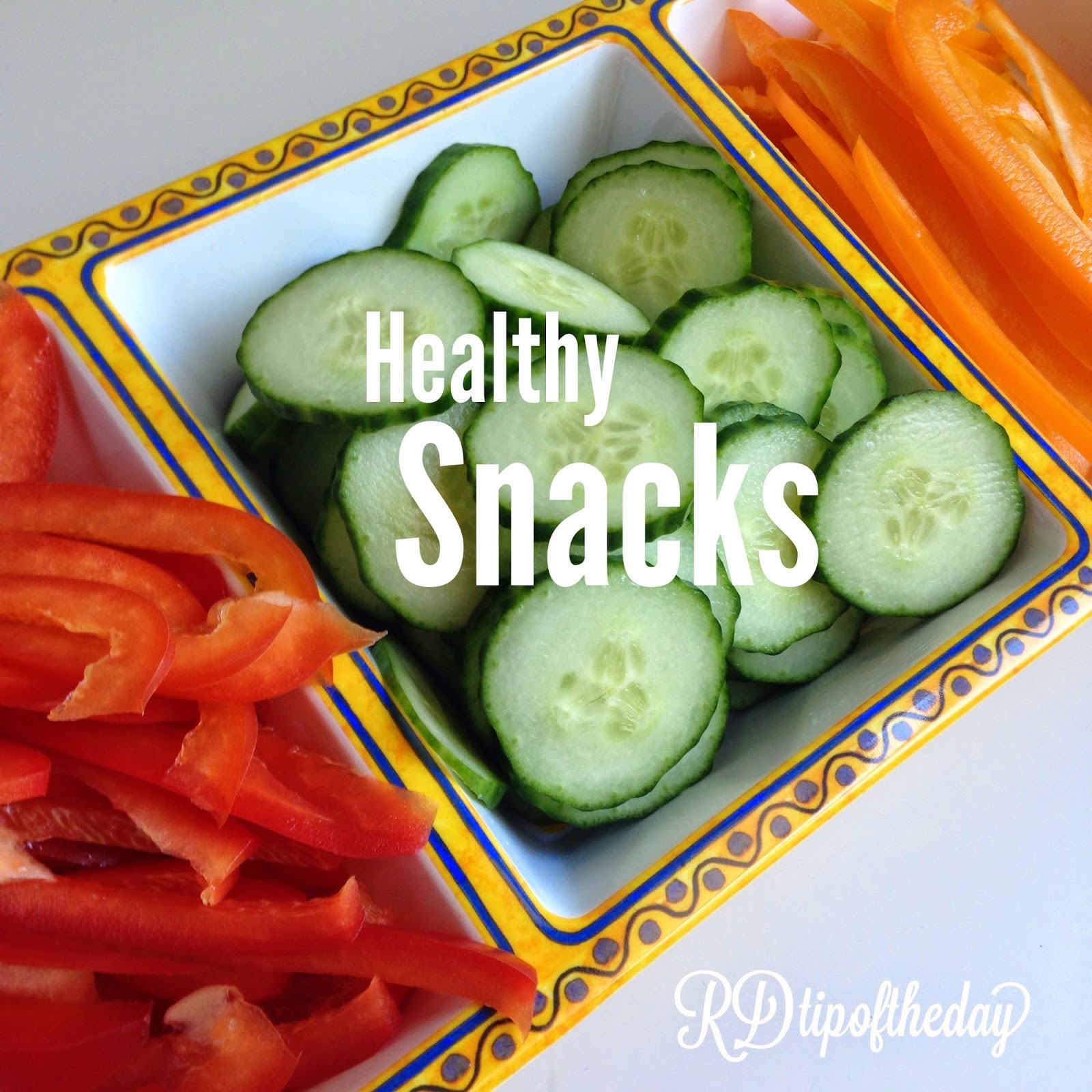
- Snacks are small portions of food that fuel us between meals. We want snacks to be quick, portable, tasty and nutritious! The afternoon lull can tempt us to re-caffeinate or grab a dessert from a vending machine. If you packed a snack, you are prepared to resist the vending machine temptations.

Action steps: Try packing peppers with hummus, fruit salad, veggies and cheese, or peanut butter and fruit for a tasty and satisfying snack.


Are you excited for the new school semester or are you dreading it?
Did you color code your school supplies? Or, is that a type-A personality tendency??
How do you prep for success during busy season?

I'd love to know your thoughts. Comment below or on social media.


For more tips, encouragement, and recipes for a healthy lifestyle, you can follow me on FacebookPinterestInstagram, and Twitter

If you liked this post, you might enjoy:


Tuesday, March 28, 2017

National Nutrition Month Roundup

March is National Nutrition month. The theme for 2017 is Put Your Best Fork Forward. This month, I shared nutrition tips and recipes to help you eat seasonally, meal plan, and cook healthy meals for you and your family.


I love educating children and their families about healthy eating. Healthy eating starts with making smart choices at the grocery store, preparing foods in a healthy way, and choosing healthy meals and snacks. Healthy eating is a lifestyle. If we make healthy choices today, these choices add up to a healthy tomorrow.
If you missed anything this month, here are the nutrition tips and recipes:


Thank you for celebrating National Nutrition Month with me. My hope is that you developed healthy eating habits this month that you will continue. Let’s keep putting our best fork forward.
Remember every time you eat, you can make healthy choices. What healthy choices did you make this month? What healthy choices do you plan to continue or try in the future?
Please comment below. I would love to hear your healthy choices. Feel free to tag me, @RDtipoftheday, with your healthy choices. Also, use the hashtag #healthyRD for the chance to be featured. Remember your health is a journey. Choose the healthy road.
For more tips, encouragement, and recipes for a healthy lifestyle, you can follow me on FacebookPinterestInstagram, and Twitter

If you liked this post, you might enjoy:

Monday, March 6, 2017

Breakfast Ideas for Every Day


March is National Nutrition Month (NNM). The theme for this year's NNM is Put Your Best Fork Forward. This month, we are focusing on how you can make healthy eating choices every day. Let's start at the very beginning with first meal of the day, breakfast.

Breakfast is the first opportunity you have to fuel your body. You are breaking the period of fasting, or not eating, while you’re asleep at night.

Eating breakfast is a healthy choice with many benefits. Children that eat breakfast perform better in school. Our brains need fuel, aka food, so it's important to start our day with a healthy, nutrient-dense meal.


Some people skip breakfast because they are running late for school or work. It can be hard to make time for cooking and eating breakfast in the morning. So, here are some quick and easy breakfast ideas you can prepare in advance or assemble quickly.
  • Whole grain cereal, low fat milk or milk alternative, and fruit
  • Breakfast sandwich with whole grain English muffin, turkey sausage, and cheese
  • Mediterranean omelette with eggs, feta, tomatoes, and spinach
  • Whole grain waffle, peanut butter, and fruit
  • Breakfast burrito with a whole grain tortilla, eggs, cheese, and vegetables.
  • Frittata with eggs, vegetables, and cheese
  • Granola, low fat yogurt, and fruit

That’s seven ideas, so you're set for a week of tasty, nutritious breakfasts. You can eat one every day for a week without repeating. Can you think of more delicious breakfast ideas? Share your favorite breakfast ideas in the comment section below.

If you want more breakfast recipes, you can try: 


Do you usually eat breakfast? Or, are do you tend to skip breakfast?
What are the barriers that keep you from eating breakfast? What helps you eat breakfast?
Feel free to share your comments below.

I love eating breakfast for dinner. Try these recipes in the morning for a great start to your day. Or, try them for a quick dinner. I bet you can make a great breakfast for dinner in less time than you can order take-out.

If you enjoyed this post, you might enjoy:


Monday, August 15, 2016

7 Tips for Healthy Eating on a Budget


Eating healthy is a priority. Sticking to your budget is a necessity. So, how do you balance the two? You get healthy eating tips from a Registered Dietitian (RD) that allow you to stay on a budget. Here are my RD tips for eating healthy on a budget.

Set a budget.
It's important to have a goal budget to meet or stay under. Figure out how much you want to spend on eating and how that works into your overall budget.

Make a meal plan.
Decide what you will be eating for the week. Make a grocery list for your breakfasts, lunches, dinners, and snacks for the week. Have a list and stick to it. Then, you will be more likely to stick to your budget. Extra items add cost to your budget.

Buy seasonally.
A great way to eat healthy and stay on budget is to eat seasonally. When you choose to eat fresh fruits and vegetable that are in season, they are cheaper. 

Buy shelf-stable and frozen items in bulk.
Examples - grains, canned veggies or fruit, and frozen vegetables and fruit.  Choose no added salt canned vegetables to limit added salt. Choose fruit packed in its own juice to limit added sugar. When comparing prices, look at the unit price. 
image via Amazon

The unit price compares price per ounce or unit. This gives you a better idea if the larger size or the smaller size is a better deals

Try store brands.
Many stores have their own store brand. Wal-mart has "Great Value" brand. Kroger has their "Private Selections" brand. Target has "Archer Farms"  and "Market Pantry" brands. Many times the stores make a comparable product with a lower price. Compare the unit price of the store brand and brand name product. Try them; you may like them and save some money.


Freeze leftovers.

This tip saves time and money. Buy food in bulk; buy enough for 2 meals. Cook once. Eat one meal. Freeze the other meal. And you have two delicious, healthy meals that took about half the time to prepare! 

Shop the sale.
Look for your favorite foods on sale. Avoid buying things just because they are on sale. But if you see one of you or your family's favorite foods on sale, buy a little extra at the cheaper price.


Healthy eating is an investment in your health. Healthy eating is an investment in your future. It is also an investment in your child's health and your family's health. We know that healthy eating affects brain development, school performance, and can decrease the risk of developing diseases like diabetes, high blood pressure, and stroke. For more on the consequences of obesity, check out the Academy of Nutrition and Dietetics.


How can you afford not to eat healthy?


If you have any tips for healthy eating on a budget, share them below in the comments.

August is Kids Eat Right Month™, the Academy of Nutrition and Dietetics and the Academy Foundation's chance to highlight the fight for our children's healthy future. Find out how you can get involved!

Stay tuned all this month for more on healthy eating and Kids Eat Right Month. For more recipes, encouragement, and tips for healthy eating, follow me on Pinterest, Instagram, and Twitter.


If you liked this post, you might enjoy:


Tuesday, November 3, 2015

Happy National Sandwich Day: November 3

It's National Sandwich Day! Sandwiches are my go-to, quick lunch. One of my undergraduate professors banned students from using sandwiches in our meal plans. Apparently, all nutrition and dietetic students eat turkey sandwiches for lunch and "prescribe" turkey sandwiches to their imaginary patients for all meal plans! I still love sandwiches and never seem to tire of making them or eating them. Here are some yummy salad and soup recipes to accompany your favorites sandwiches


Enjoy these yummy accompaniments to your favorite sandwich. And, celebrate sandwich day! For more recipes, encouragement, and tips for healthy eating, follow me on PinterestInstagram, and Twitter

Monday, June 29, 2015

Being a Collegiate Professor Roundup

There are many job opportunities in the field of nutrition and dietetics. We recently finished a series on being a collegiate professor. Thank you for your questions and interest in this series. In case you missed anything, here is a round up of the series.


Check out an update on the courses I will be teaching in the Fall in Being a College Professor.


Check out the basis of what I teach as an undergraduate nutrition professor in Being a College Professor: 10 Basic Principles of Nutrition.


Do you want to know why I became a RD and college professor?


Do you want to know how I became a RD and college nutrition professor?

If you have any additional questions, feel free to ask them in the comments below, on Instagram, or TwitterI would love to hear your questions about being a RD, being a college professor, or any nutrition-related questions. Also, feel free to leave any tips or tricks you've learned about being a great mentor or teacher. #NeverStopLearning

Monday, June 22, 2015

How I became a RD and College Nutrition Professor


Being A College Professor
Since my last posts about being a college professor and why I became a college professor,  many of you have asked questions about how to become a collegiate professor, what does it look like be an online professor? How do I come up with coursework? These were the same questions that I had when I started teaching. So, I'll address some of these topics today and in future posts, since you had questions. So, stay tuned.

I have always loved teaching, and I knew I wanted to teach eventually. But, I took a slightly different approach to becoming a teacher. I became a registered dietitian (RD) first. To become a RD, you must complete an undergraduate degree with prerequisites for entrance into a dietetic internship. You apply and match to an internship program. Once you complete your dietetic internship, you are eligible to take the RD exam. . Once you pass the RD exam, you can practices as a dietitian. 

Master of Science
After I passed my RD exam, I began working as a clinical RD. I worked full-time at a pediatric hospital and worked to complete my my Master of Science (MS) part time. 

I earned 12 graduate level credits during my dietetic internship. I was fortunate enough to find a Dietetic and Nutrition MS program that was mostly online. Having online courses was great for me since I was working full-time, I am self-motivated, and I had a good base understanding of the subject matter from my undergraduate degree. Also, it provided me with personal experience taking online courses as a student. This has been very valuable since I'm now on the "other side" teaching online courses. 

My MS degree did require some face-to-face classes, which I enjoyed. It was nice to have classes with people. I love meeting new people, so this was a nice change of pace from the online courses.

CSP or specialty certification
I earned a specialty degree in pediatric nutrition. I did this because I am a clinical pediatric RD, but I was offered the Lifecycle Nutrition course because of this degree. The Lifecycle Nutrition course is the only course I had as an undergraduate student that had a pediatric portion. So, it never hurts to specialize. And, keep learning.

Sending out your resume
When I decided to pursue teaching as an RD, I sent out resumes to local universities, community colleges, dietetic internship programs, and cooking schools. All of these institutions provide courses on food, nutrition, health, and food safety, which an RD can teach. I met several people through this, but ultimately there were no jobs available.

Networking
I actually got my first job through networking. I reached out to my dietetic internship program director to see if she knew of any jobs in her institution or at another institution. There were none at the time. But, she gave my contact information to a Undergraduate Director

Volunteering
If you are interested in teaching or any other aspect of being a RD, I would recommend volunteering. It may take some time and effort to find a RD that has the time to have a volunteer, but it will be worth it! Also, some dietetic internships have "alternate" or "staffing" weeks where you can request to shadow a RD in a specific setting. Take advantage of this opportunity and explore some different job opportunities for RDs.

I now have the pleasure of teaching several online courses, Basic Human Nutrition and a Lifecycle Nutrition. So, wish me luck as I work to finish reading 19 chapters of Lifecycle Nutrition. 

Are you a college teacher? Do you have any advice for those wishing to become professors? Do you have any questions about becoming a RD or professor? 
If so, comment below with your questions or advice about being a RD or professor.

For more recipes, encouragement, and tips for healthy eating, follow me on PinterestInstagram, and Twitter.

Monday, June 15, 2015

Why I Became a RD and College Professor


Being A College Professor
Since my last post about being a college professor, many of you have asked questions about how to become a collegiate professors, what does it look like be an online professor, and how do I come up with coursework. These were the same questions that I had when I started teaching. So, I'll address these topic in a few different posts. So, stay tuned.

I have always loved teaching. Most of the people in my family are teachers. I enjoyed school  and wanted to be an elementary or science teacher for most of my life. This was until my 12th grade English teacher (Hey Mrs. Malone!) had us do a project to prep us for college. She had us compare at least 2 professions. We had to look at the schooling required, collegiate coursework, areas of employment, rate of growth of the profession, and of course salary. While most of these things were comparable for teachers and dietitians, I like the idea of more 1:1 teaching, the variety of RD (registered dietitian) workplaces, and the flexibility of being a RD (read part-time, PRN, or as-needed employment).

I also knew I wanted to teach college eventually. But, I wanted to have a few years of clinical practice under my belt before teaching. Practicing as a RD before becoming a teacher was also encouraged by many of my mentors. 

Also, one of my favorite undergraduate teachers, Brandi Milioto, took this path. Brandi practiced as a RD before teaching college courses. I really enjoyed her classes because she is a fantastic teacher, great mentor, and she had real-life examples to add to the textbook information. I remember always being engaged in her classes and her real-life medical nutrition therapy (MNT) examples added so much to the lectures. (Don't worry; no HIPPA-protected information was shared.)

I have the pleasure of teaching a Lifecycle Nutrition class next Fall and Spring for undergraduate dietetics and nutrition students. I am so excited for this opportunity! It is the only course that includes pediatric nutrition. Since I also practice as a pediatric RD and have my CSP (Certified Specialist in Pediatric Nutrition), I am so excited to share what I've learned about pediatric nutrition. So, wish me luck as I work to finish reading 19 chapters of Lifecycle Nutrition. 

For more recipes, encouragement, and tips for healthy eating, follow me on PinterestInstagram, and Twitter.

Monday, June 8, 2015

Being a College Professor: 10 Basic Principles of Nutrition


10 Basic Principles of the Science of Human Nutrition
These are the 10 basic principles of the science behind human nutrition. As a RD, this is what I work to promote. I hope to increase the public's knowledge and awareness of these basic principles along with a healthy view of nutrition, body image, and health. I couldn't have said these any better. 

"1. Food is a basic need of humans
2. Foods provide energy (calories or kcal), nutrients, and other substances needed for growth and health.
3. Health problems related to nutrition originate within cells
4. Poor nutrition can result from both inadequate and excessive levels of nutrient intake
5. Humans have adaptive mechanisms for managing fluctuations in food intake.
6. Malnutrition can result from poor diets and from disease states, genetic factors, or combinations of these causes.
7. Some groups of people are at higher risk of becoming inadequately nourished than others. Poor nutrition can influence the development of certain chronic diseases.
8. Adequacy, variety, and balance are key characteristics of a healthy diet.

9. There are no “good” or “bad” foods."

Quoted from:
Brown JE. Nutrition Through the Life Cycle. Stamford: Cengage Learning; 2014.

For more recipes, encouragement, and tips for healthy eating, follow me on PinterestInstagram, and Twitter.

Monday, June 1, 2015

Being a College Professor

I hope many of you are enjoying wrapping up school or enjoying summer vacation. You may remember that I am a college professor. So, the end of the school year is actual a busy time for me. After grades are posted, I start working on next semester's classes. 


I have the pleasure of teaching a Lifecycle Nutrition class next Fall and Spring for undergraduate dietetics and nutrition students. I am so excited for this opportunity! It is the only course that includes pediatric nutrition. Since I also practice as a pediatric Registered Dietitian and have my CSP (Certified Specialist in Pediatric Nutrition), I am so excited to share what I've learned about pediatric nutrition from our textbook along with real world examples (without disclosing any HIPPA information). I am also excited to have the same group of students for 2 semesters; I hope the feeling will be mutual for the students :)

So, wish me luck as I dive into 19 chapters of Lifecycle Nutrition. 

For more recipes, encouragement, and tips for healthy eating, follow me on PinterestInstagram, and Twitter.

Tuesday, April 28, 2015

3 Tips for Successful Television Appearances

I recently appeared on television to promote healthy nutrition. I have been on television promoting National Nutrition Month, the department and organization I work for, and healthy eating. If you think you'll never be on t.v., I wouldn't discount yourself. There are many opportunities to promote the field of health and nutrition in the media. 

I am naturally inquisitive  Every time I appear on t.v., I ask the professionals for tips on presenting on air. So if you are ever on camera, here are a few tips that I've gleaned from the professionals.


1) Be Prepared

  • Contact the producer or whomever is your contact at the station. Offer sample questions to the production crew and confirm which questions they will be asking. The interviewer may go off topic at anytime. But, you are the expert. You can bring any question back to your interview points. Just go with the flow.
  • Bring visual aids. Always bring more than you think you will need. The television crew can help you set up your props to make them look great on camera. 
  • Arrive early. Some interviews will require a run through. If you have props, you will need time to set them up.


2) Speak Clearly

  • Don't rush. Try to make about one point for every minute of your segment. My segments varied in length from 4-7 minutes. So, be prepared to fill the time without stuffing it too full of information. 
  • Speak clearly; you are the expert. So, communicate your knowledge effectively.
  • Use simple language. Remember your audience are viewers, not physicians. So, make sure you present for your audience. Since RDs are in the health field, some medical terminology may need to be used. Just explain all medical terminology clearly. And, stay away from medical abbreviations unless you clearly explain each abbreviation.
  • Make concise points. Concise points turn into sound bites, which are a great way to promote your organization or cause. I was given several key points or phrases to include in each of the segments I was in.


3) Make Smart Wardrobe Choices

  • Avoid small patterns.
    • Small patterns like thin stripes tend to distort on camera and become a distraction. Instead, choose solid colors. I have also been told to avoid stark white and black because of lighting issues and color balance.
  • Dress modestly.
    • Avoid tight, low cut, or short-length clothes. There are always many cameras on set. The cameras are at many different angles. You want to make sure you are comfortable in your clothing choices and give a professional appearance. So avoid clothing that may become immodest when seated or from high or low camera angles. In one of my t.v. appearances, a camera man climbed on a ladder to get a better angle of the foods. Now that is dedication.
  • Have a neat appearance.
    • Wear makeup.The lights are bright and will wash you out. Put makeup on heavier than normal because of the bright lighting.
    • Brush or comb your hair before going on camera. 

Do you have any tips for presenting on camera? I would love to hear them! Leave a comment below.

For even more recipes, encouragement, and tips for healthy eating, follow me on PinterestInstagram, and Twitter .